TalentiqaGiving AI superpowers to HR departments.
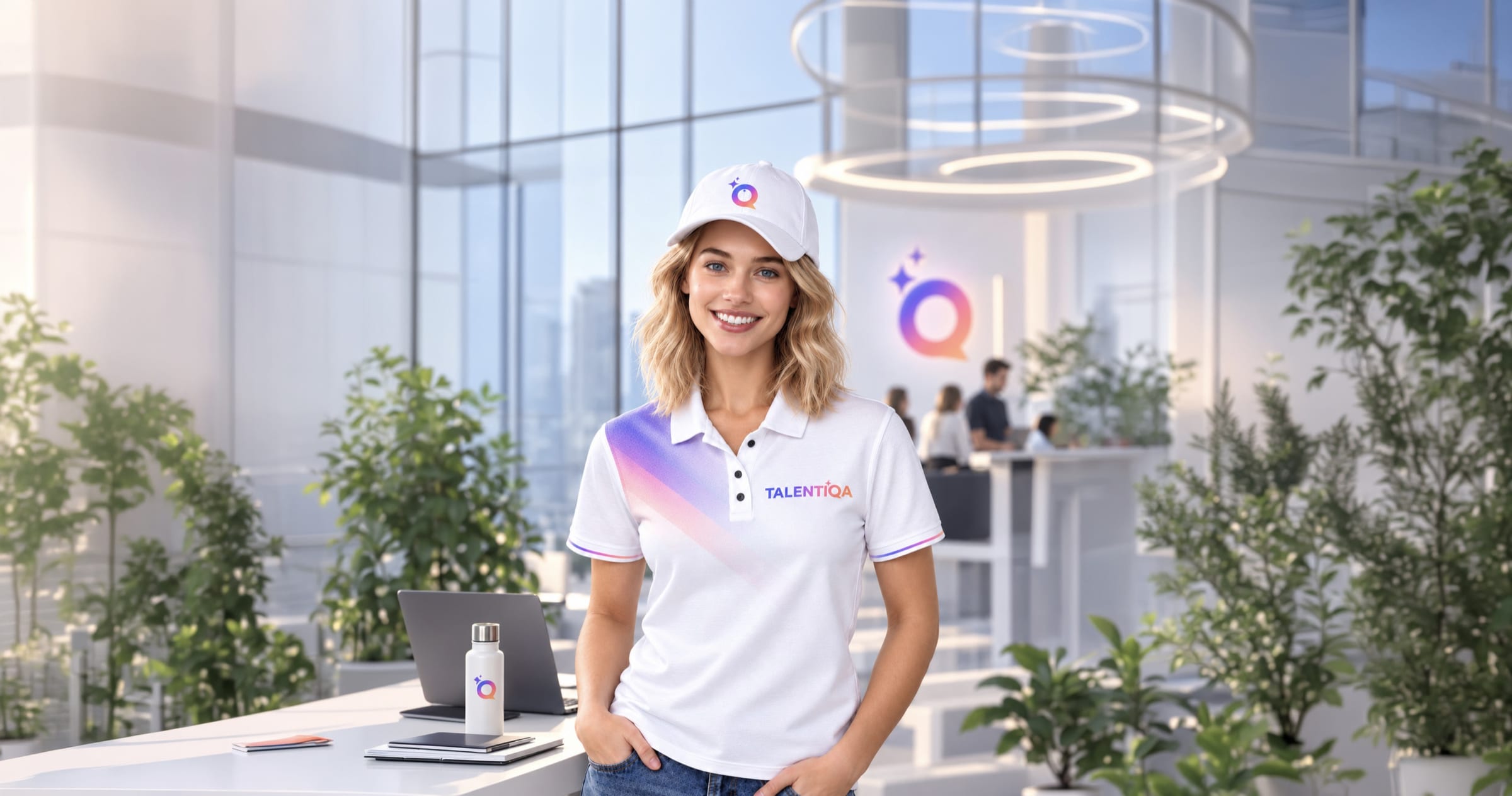
At a glance
- Design thinking
- The product is a conversation, so the Q became a speech bubble with the sparkle of AI above it.
- Problem
- An AI hiring tool has to earn the trust of recruiters and candidates alike, and Talentiqa had only a name.
- Approach
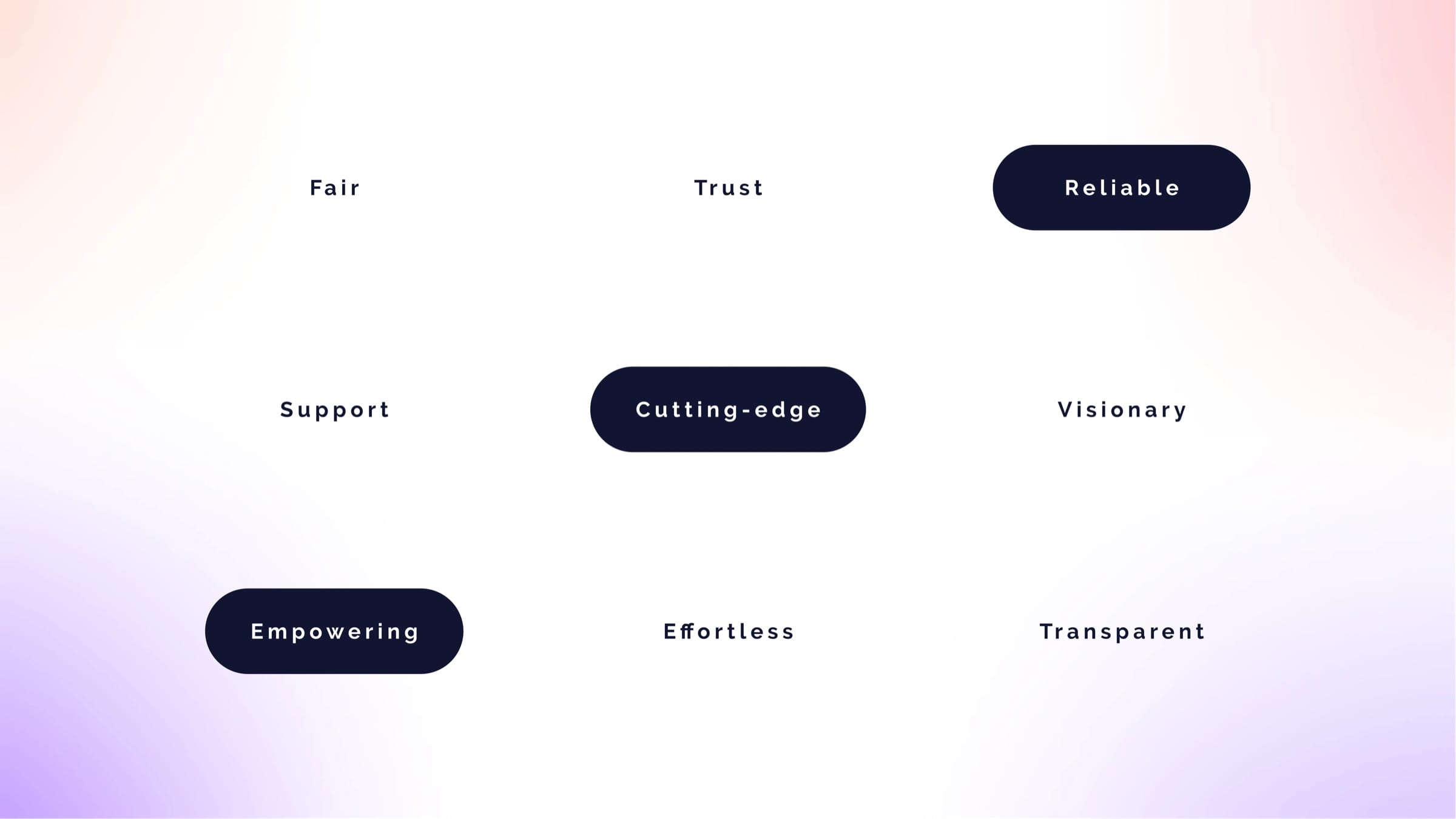
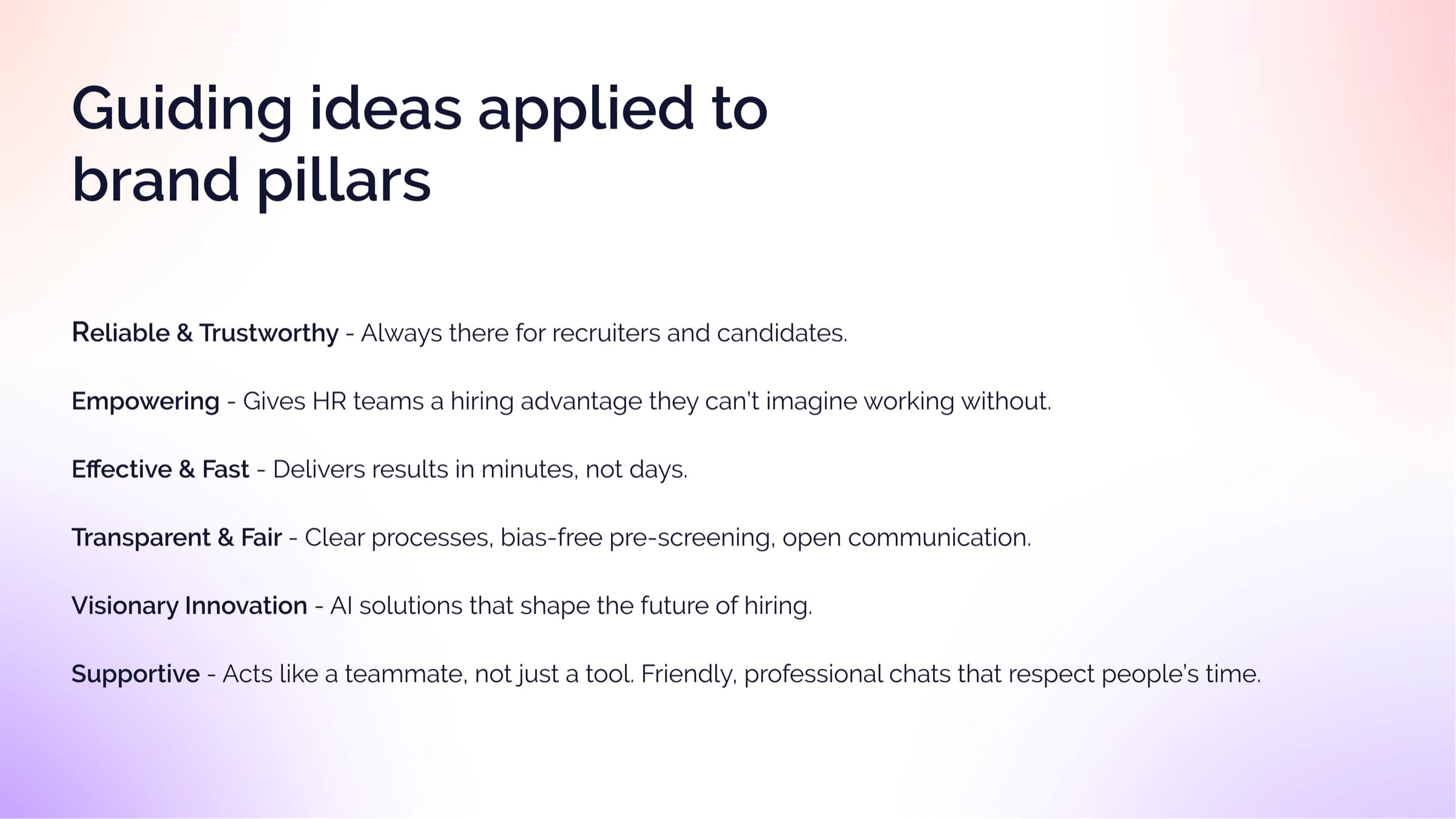
- Team keywords became six brand pillars, and 17 stakeholders rated four design directions before one went forward.
- Outcome
- The brand and website are live. Sales materials, merch and the first web-app designs are delivered.
- Role
- Lucie as fractional CMO, with the Talentiqa team.
- What we designed
- Positioning
- Brand pillars
- Visual identity
- Website design
- UX/UI design
- Merchandise
- Duration
- 9 months
- Platforms
- Website
- Web app and candidate chat
- Sales materials
- Merchandise
The team asked for fairness and cutting-edge technology in the same breath.
The positioning
AI pre-screening that saves high-volume HR teams hours, inside the applicant tracking system they already use.
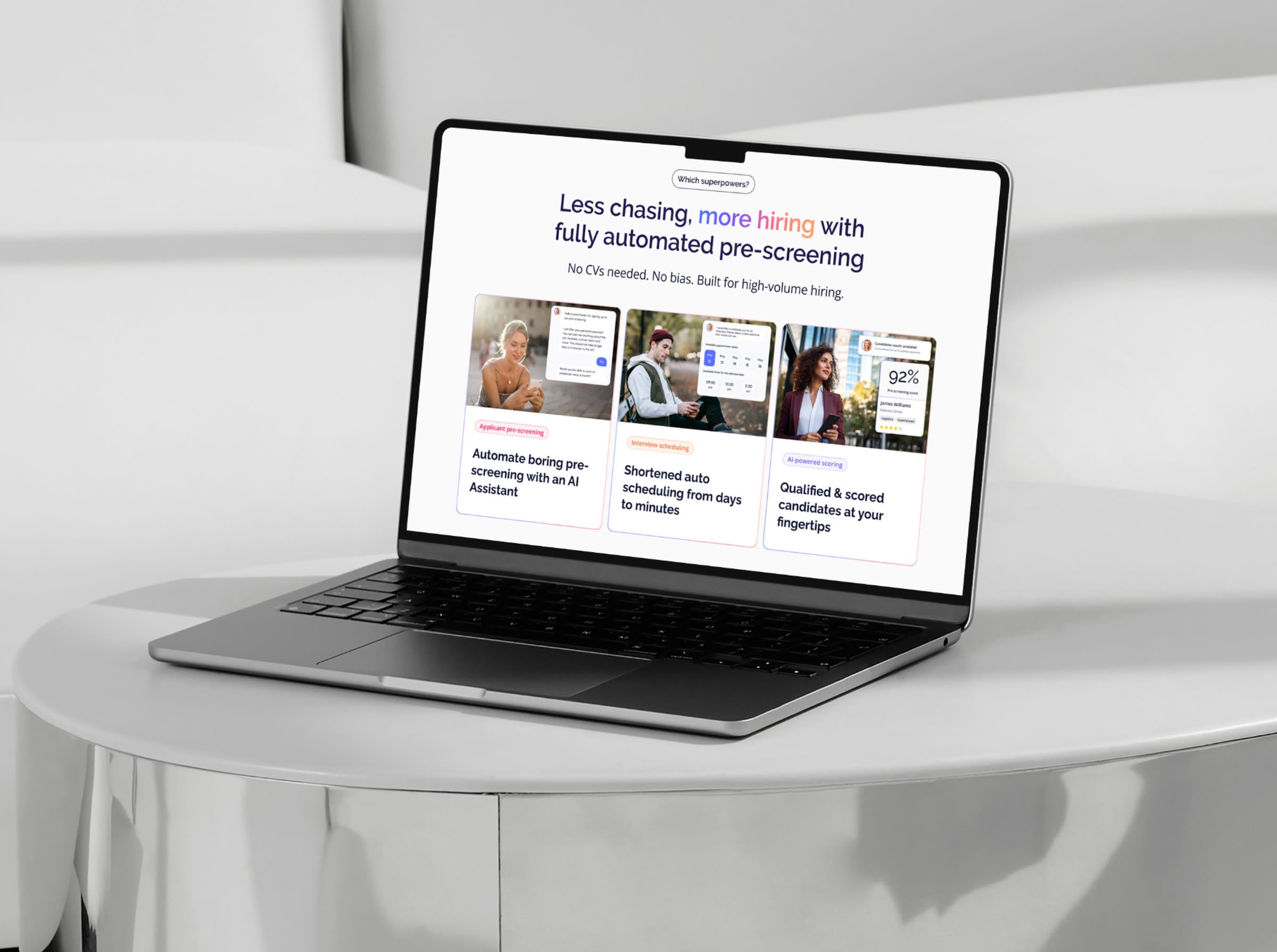
Talentiqa works only in blue-collar, high-volume hiring, and it does not rely on CVs or the bias they carry. The homepage puts it plainly, “Less chasing, more hiring”.
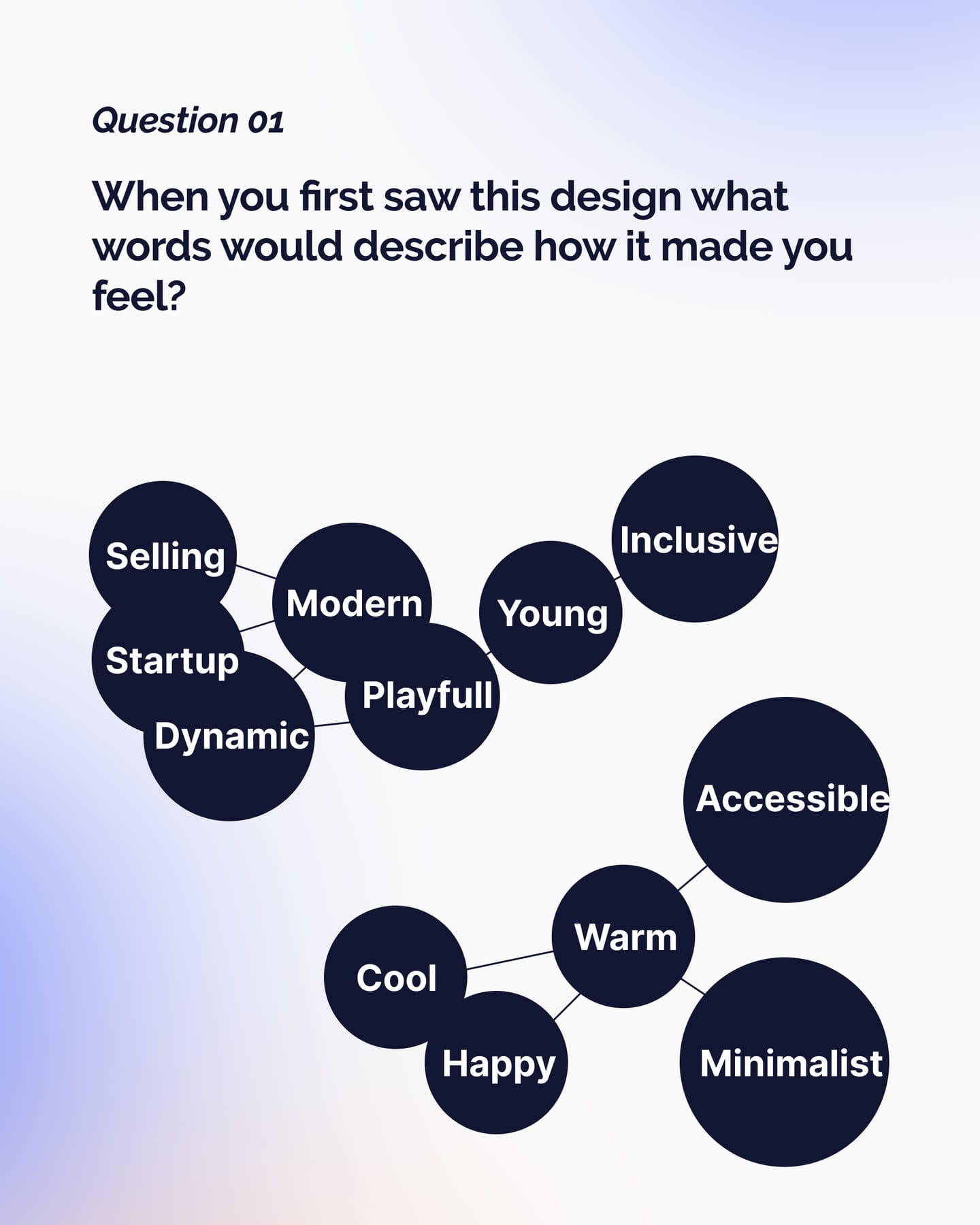
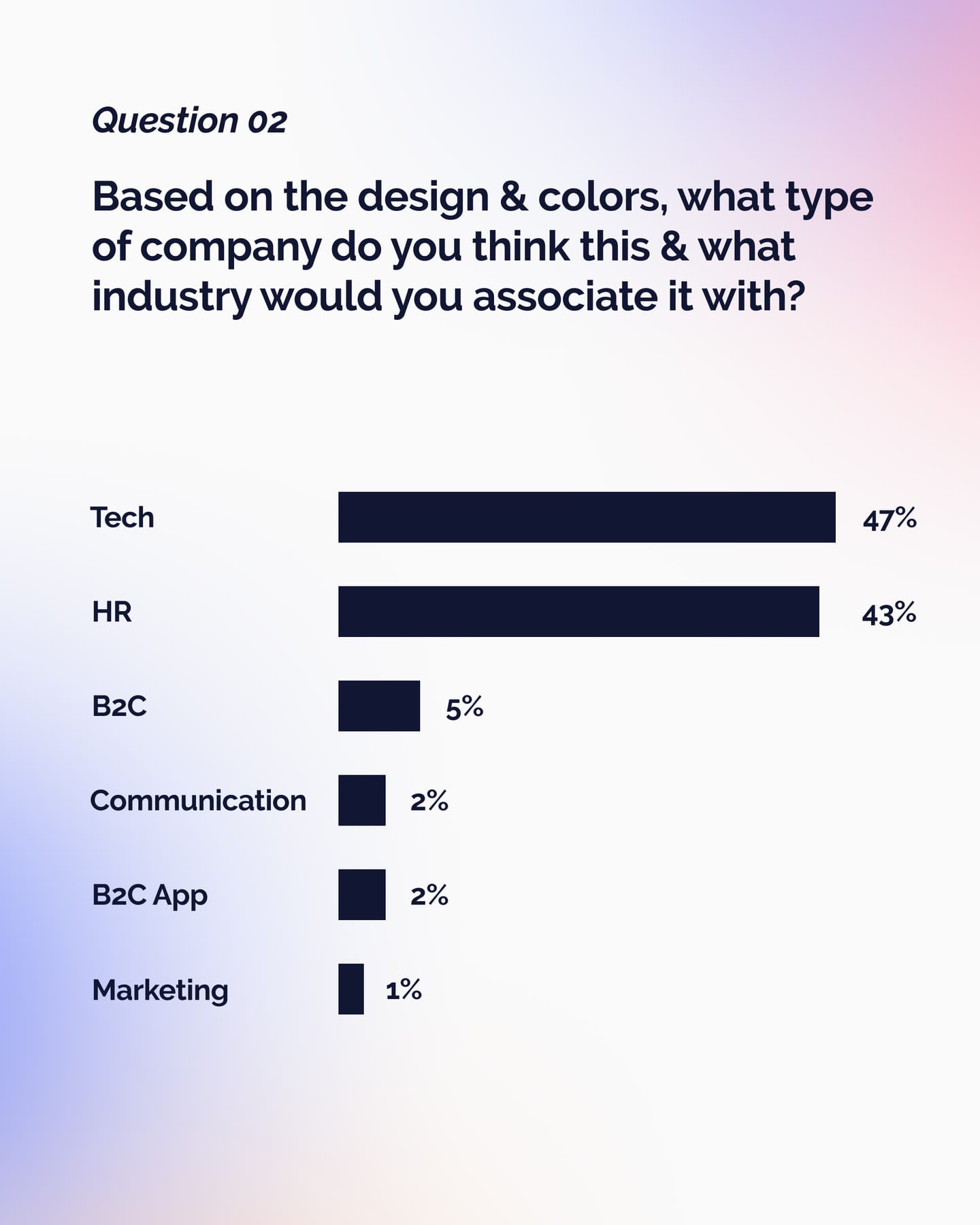
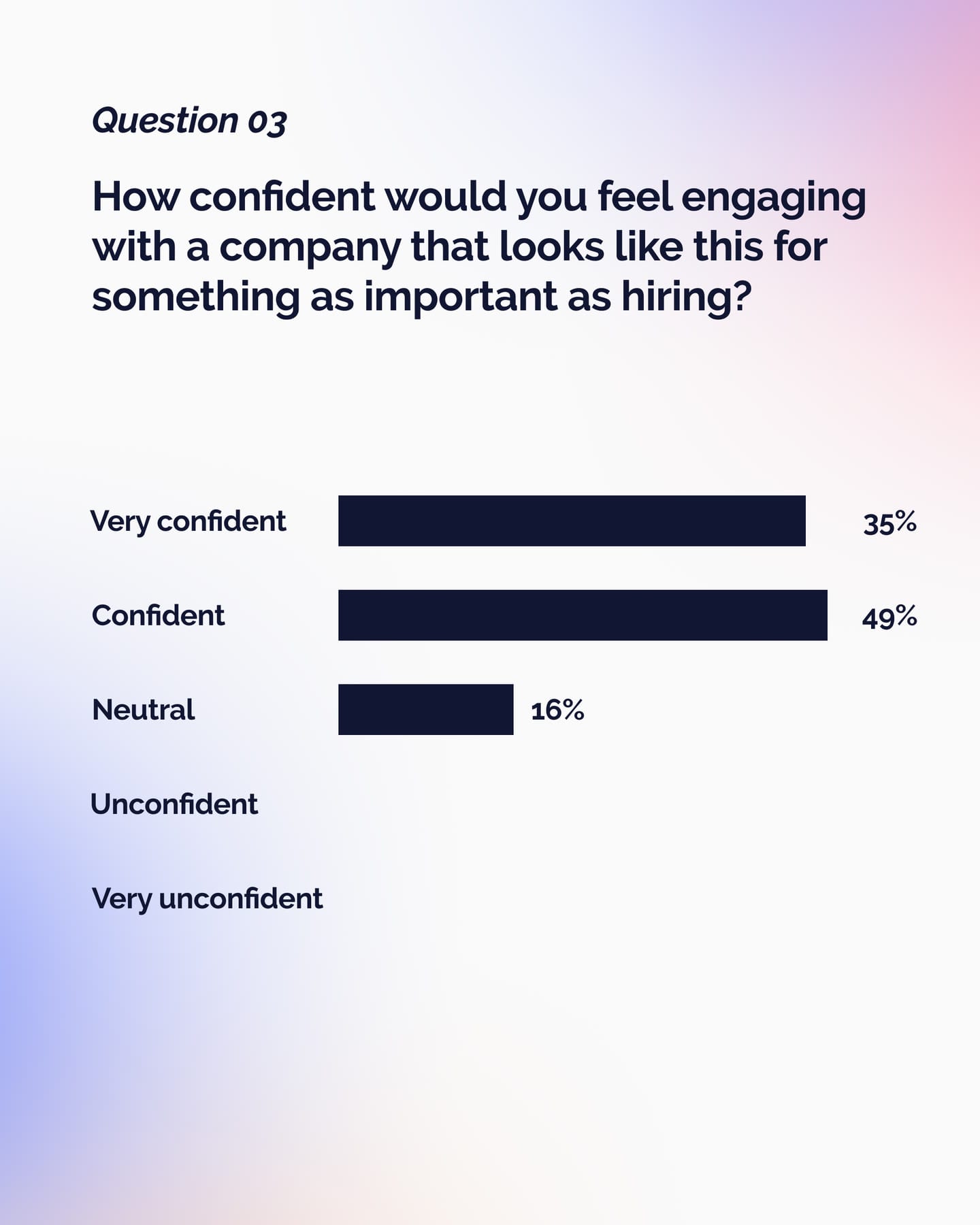
A short survey checked how people read the new brand.
Three questions: which words the design brings to mind, which industry people place it in, and how confident they would feel using it for something as important as hiring.
The decision
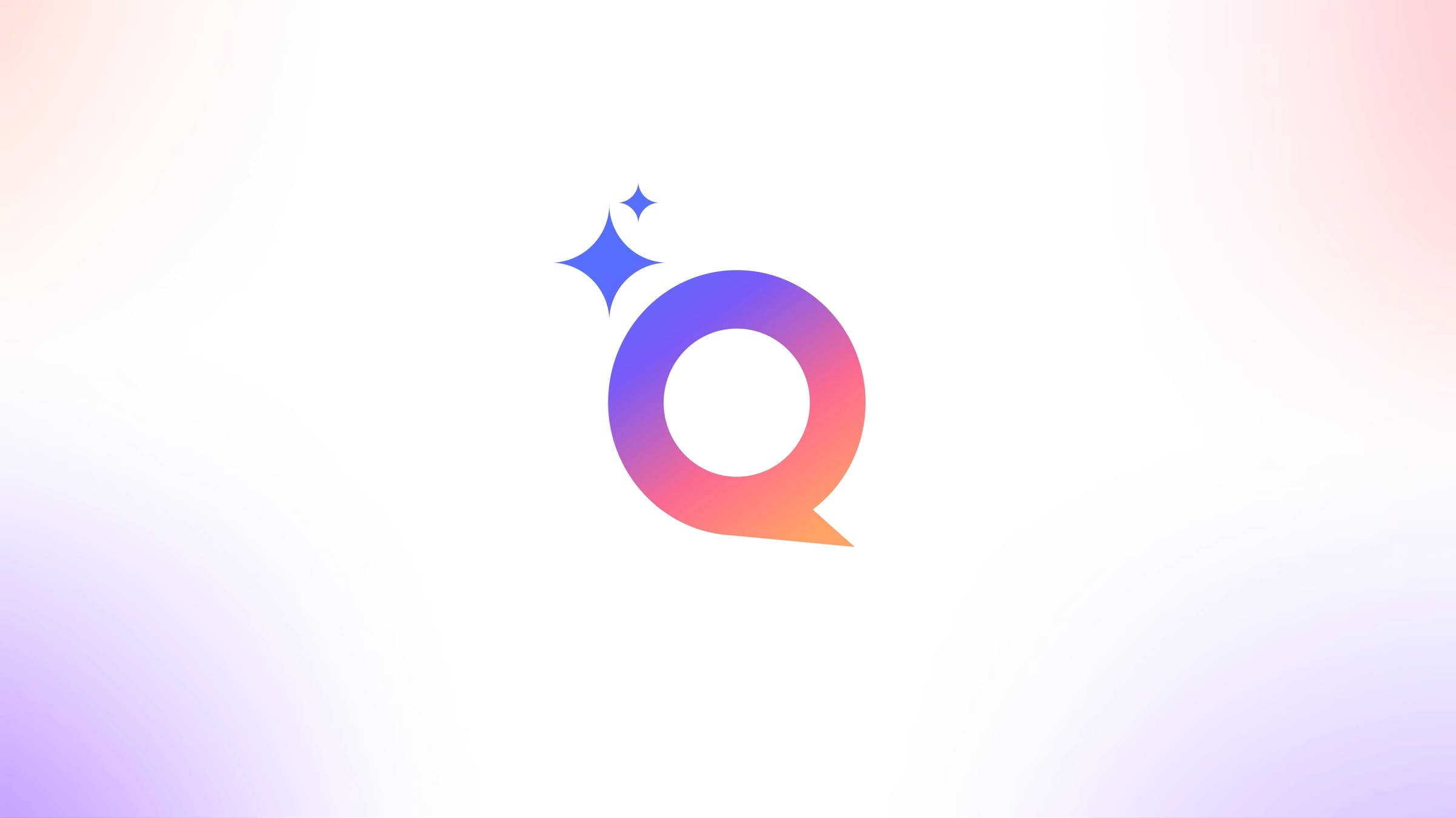
The Q became a speech bubble, with the sparkle of AI above it.
Talentiqa’s product is a conversation. An assistant chats with candidates before a recruiter does, so the mark had to carry the conversation and the AI at once.
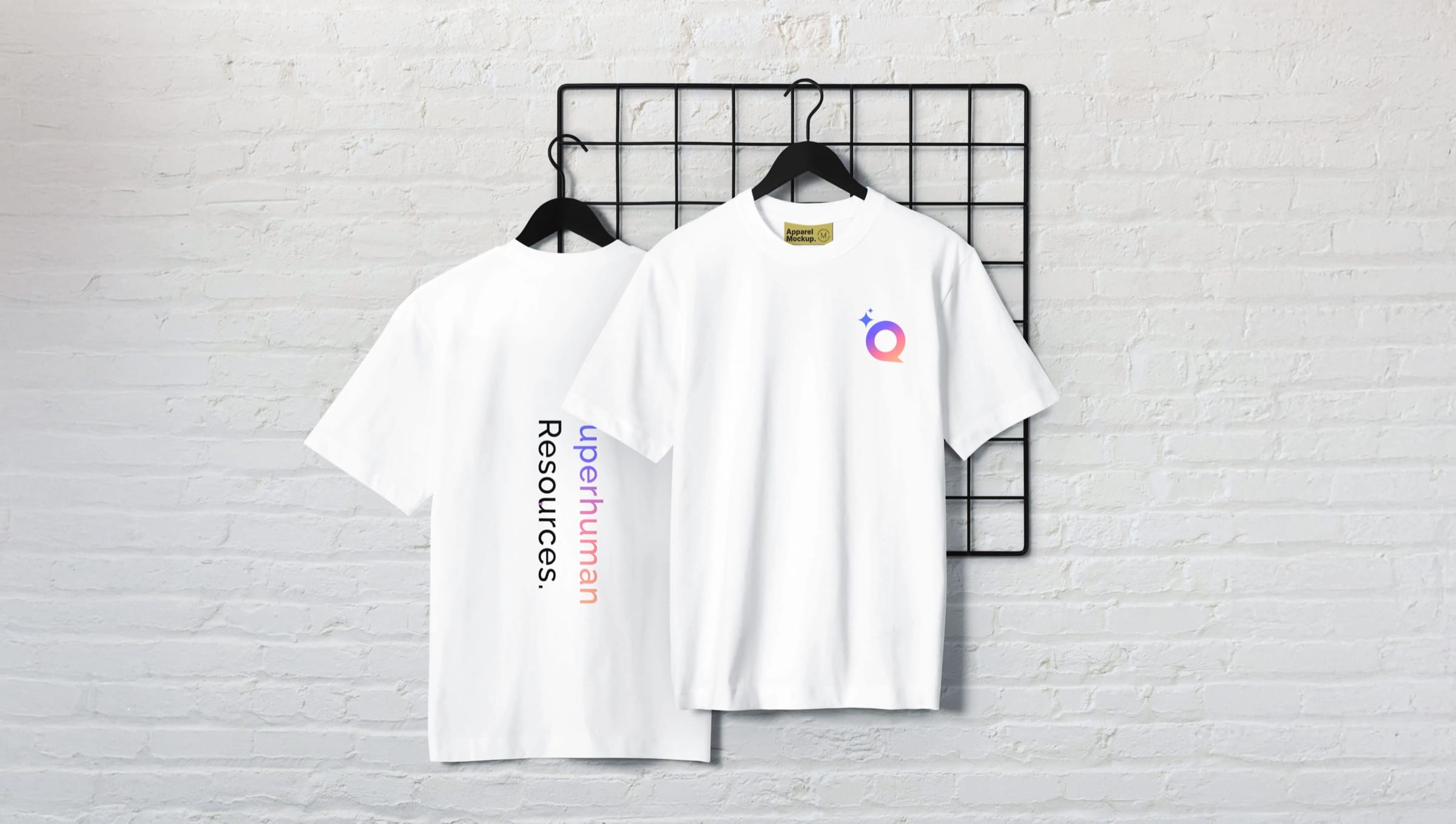
It works inside the wordmark and on its own, down to a T-shirt, in the gradient the stakeholders had backed.
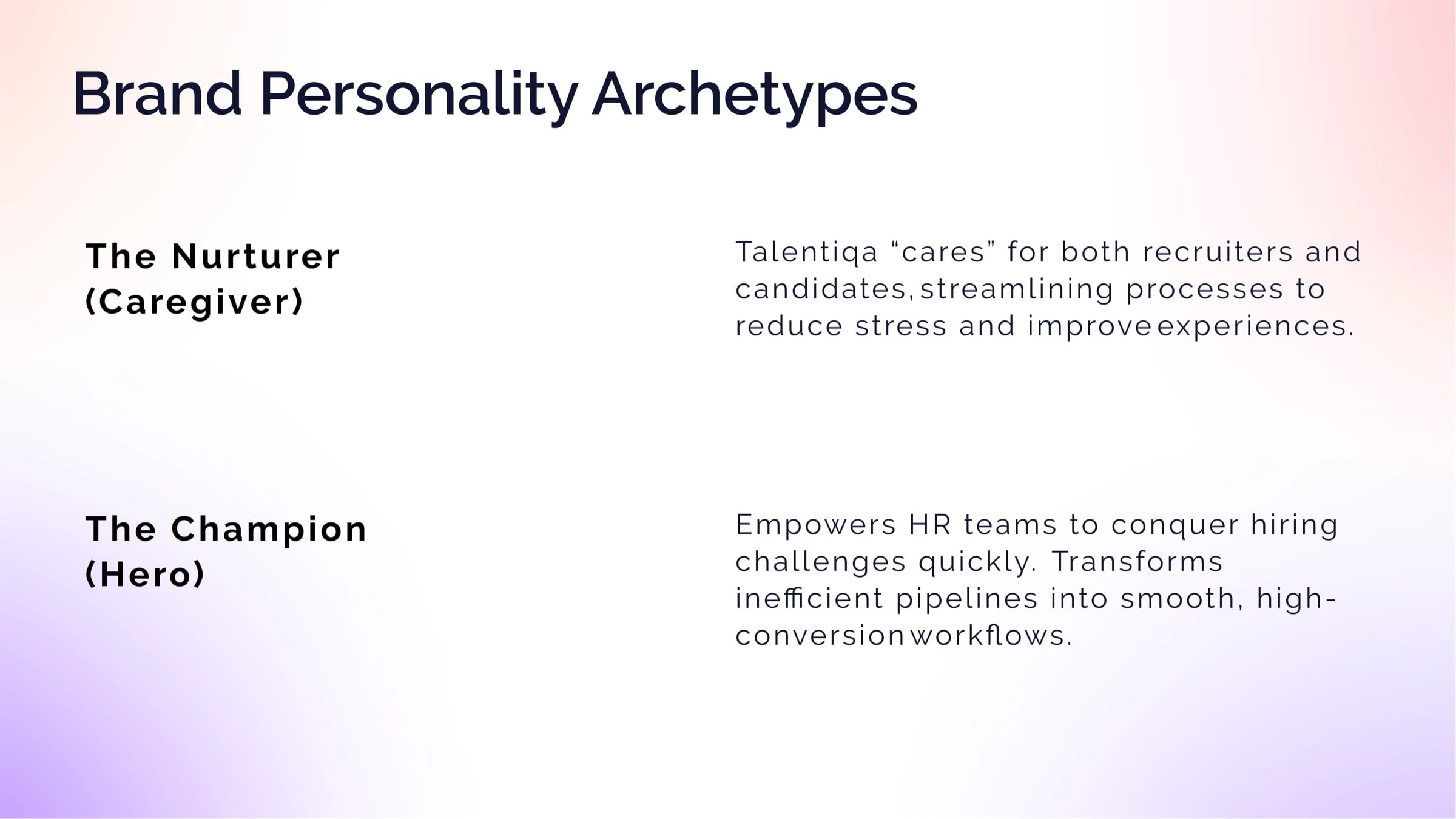
The pillars describe how the brand behaves in a conversation.
Supportive means acting like a teammate, in friendly chats that respect people’s time. Two archetypes set the voice. The Nurturer looks after recruiters and candidates, and the Champion helps HR teams win.
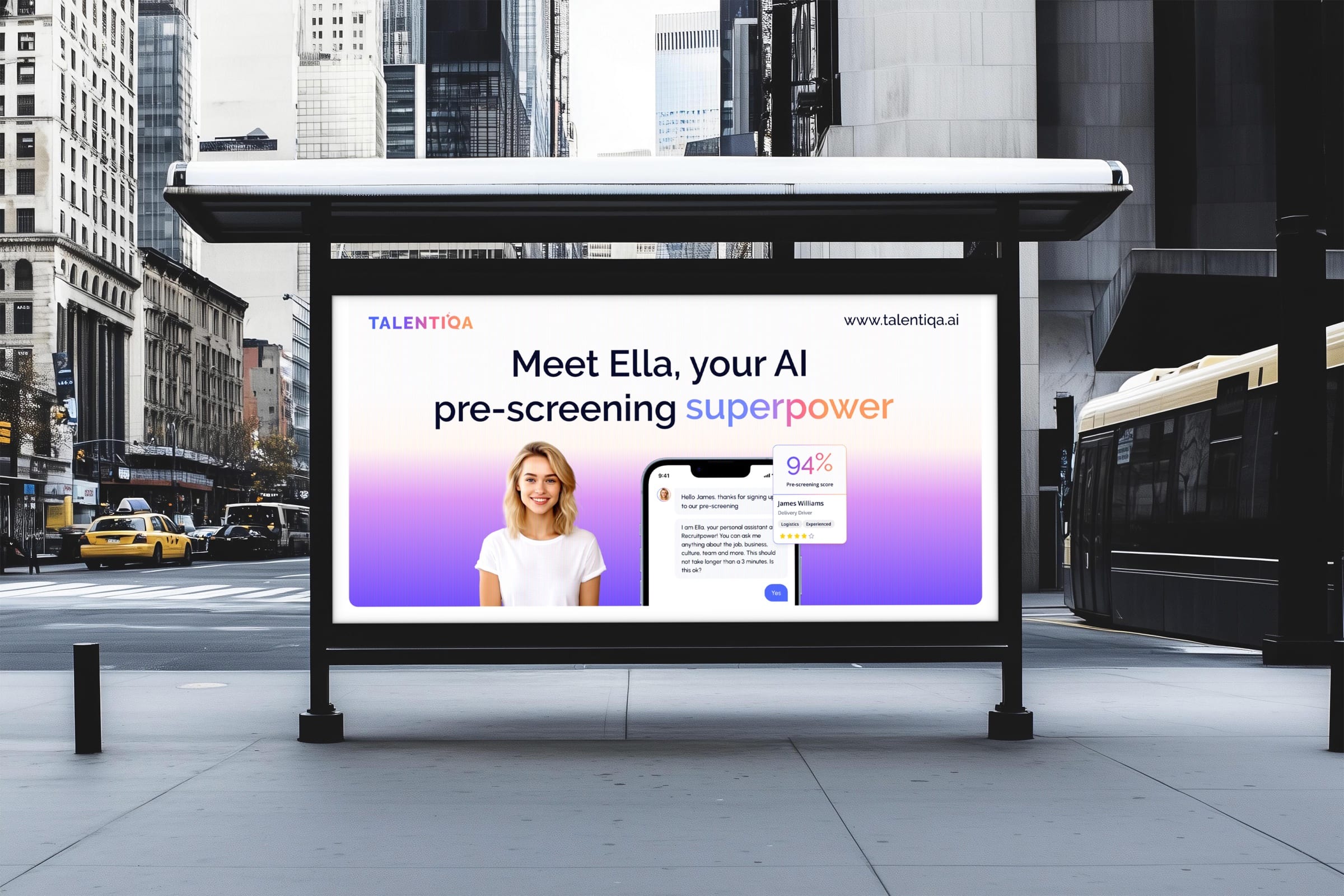
The website introduces Ella as a colleague first.
The same promise leads everywhere, from the homepage to the street: Ella first, then the case for decision makers and the detail recruiters need.
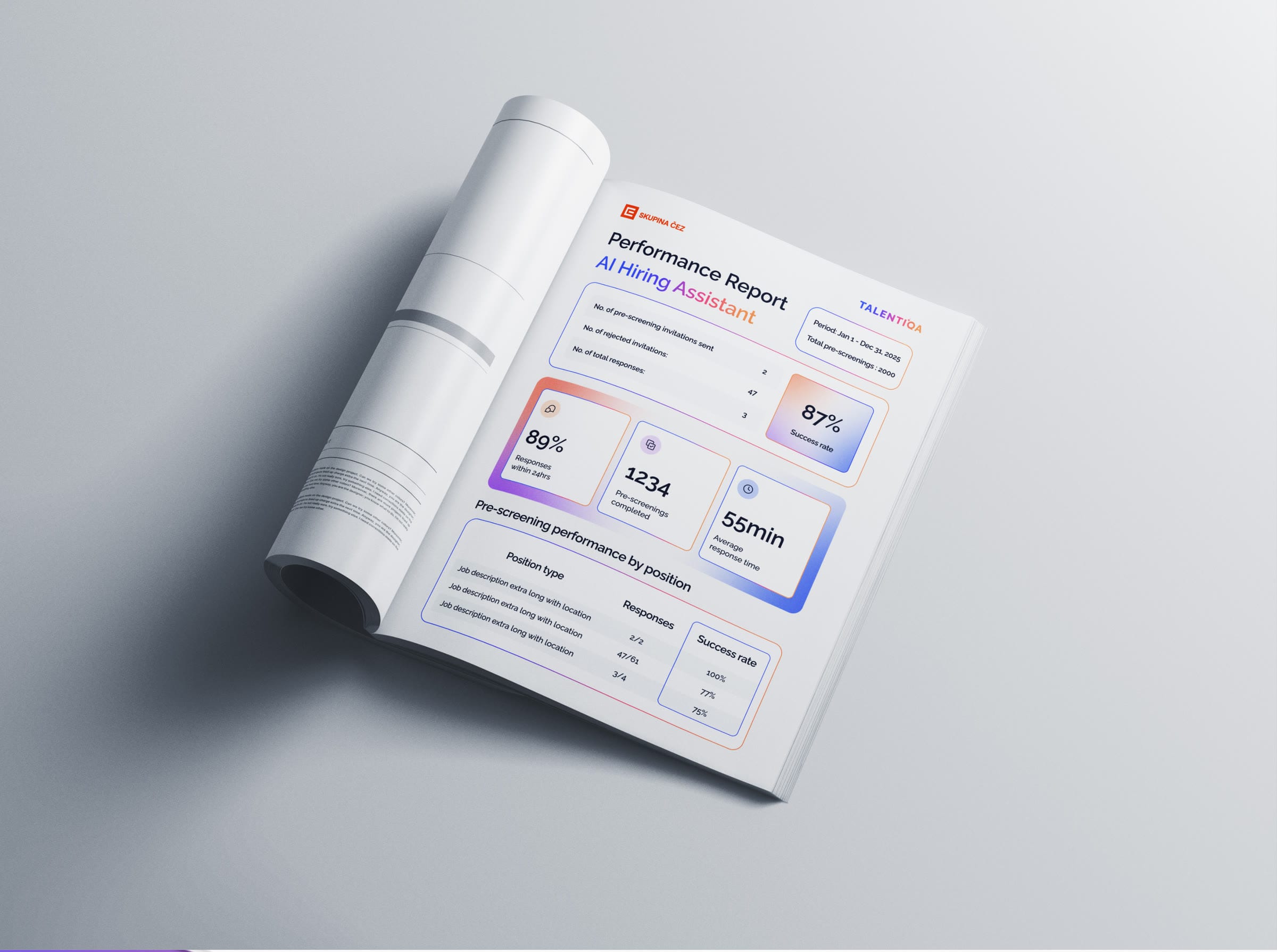
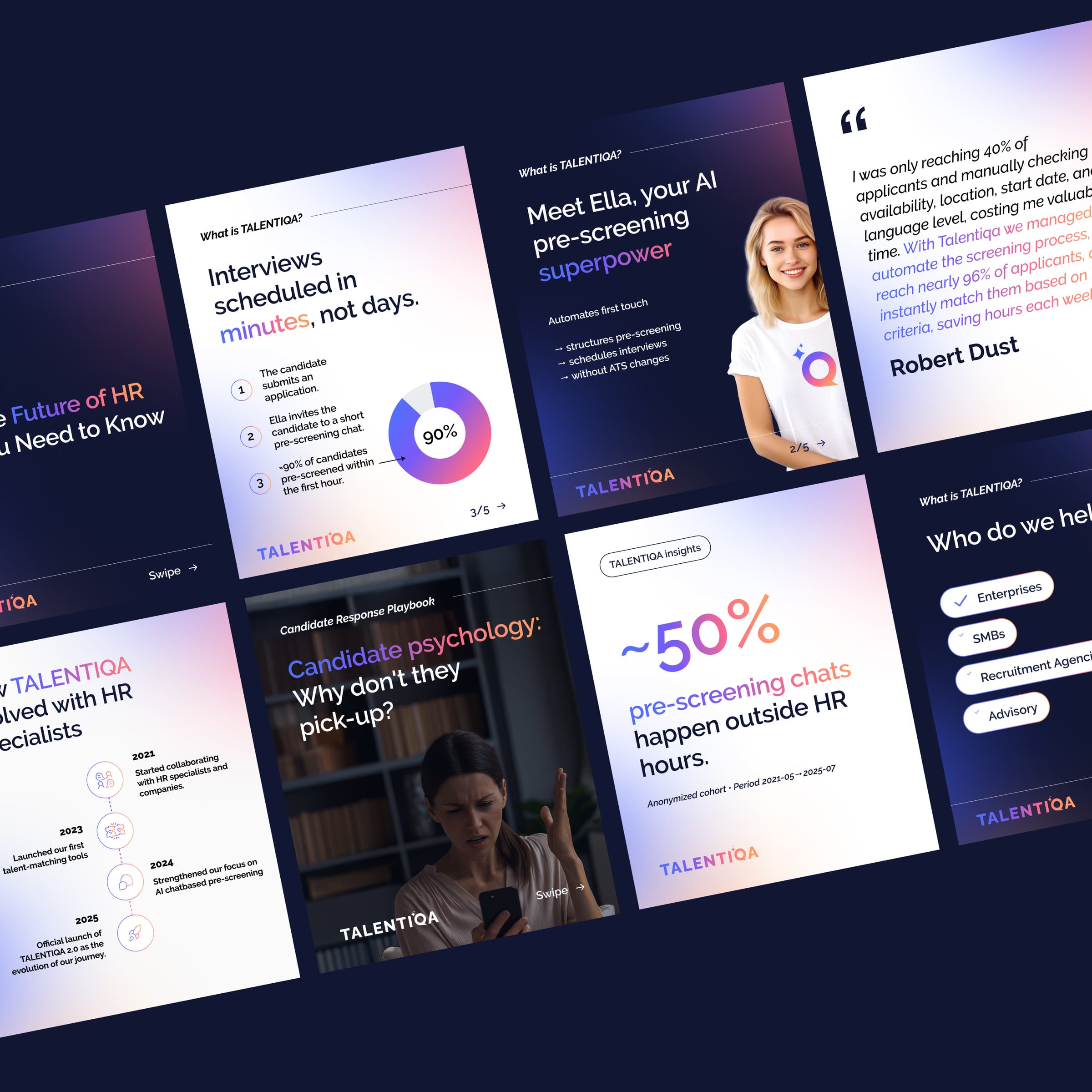
“Less chasing, more hiring” had to hold in print and in a feed too.
The homepage promise is the one every other piece has to keep. A performance report and a post lead with the same benefit for HR teams and carry the same gradient and Q, so a recruiter meets one company wherever they meet it.
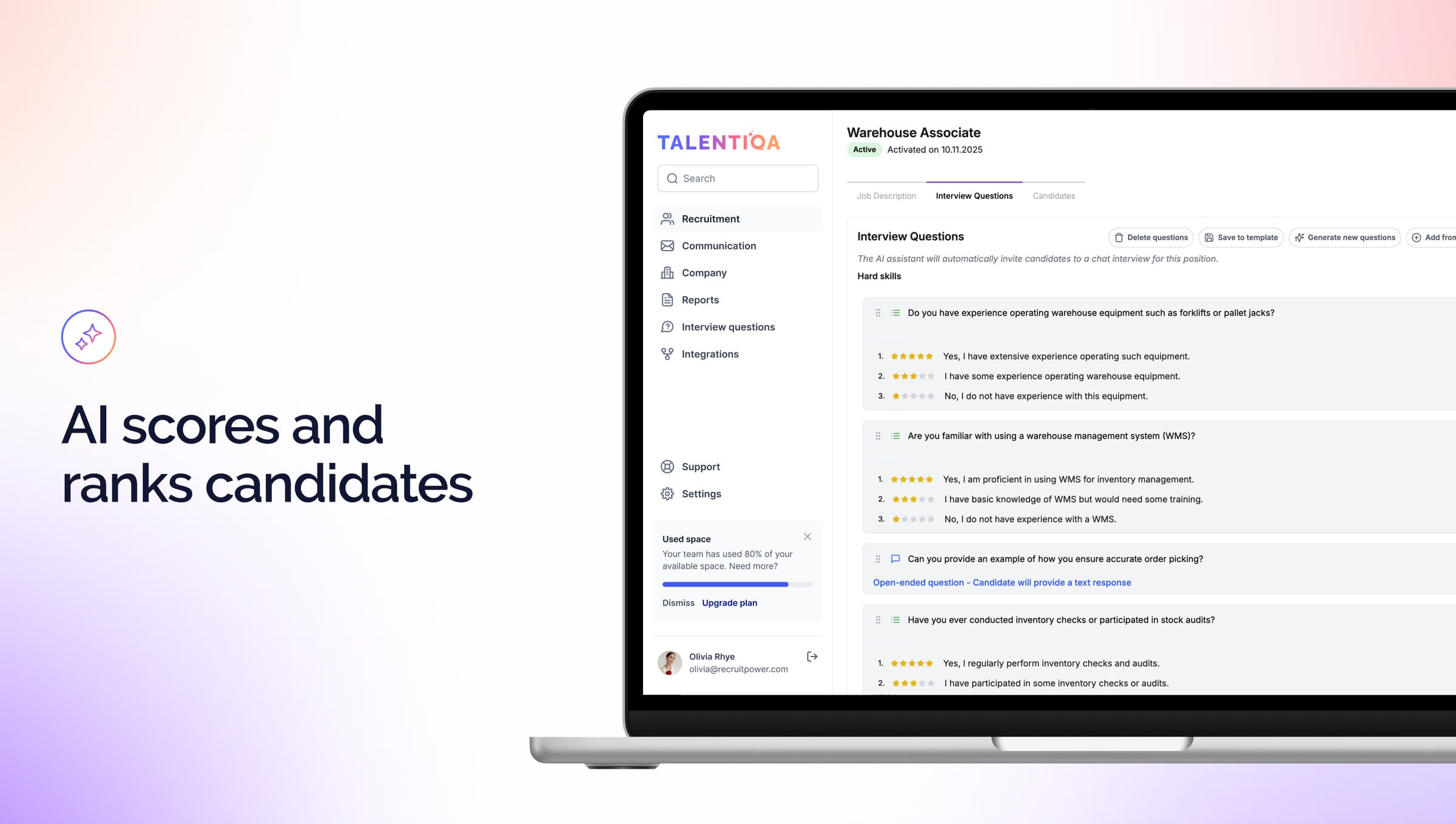
The AI scores and ranks candidates against answers the recruiter defines.
Each interview question comes with example answers rated from one to five stars. A candidate’s score can be read against the answers the recruiter set for that position.
Confidential
The detailed product screens are shared on request.
They show confidential client work, so Lucie sends a private link to each request she approves.
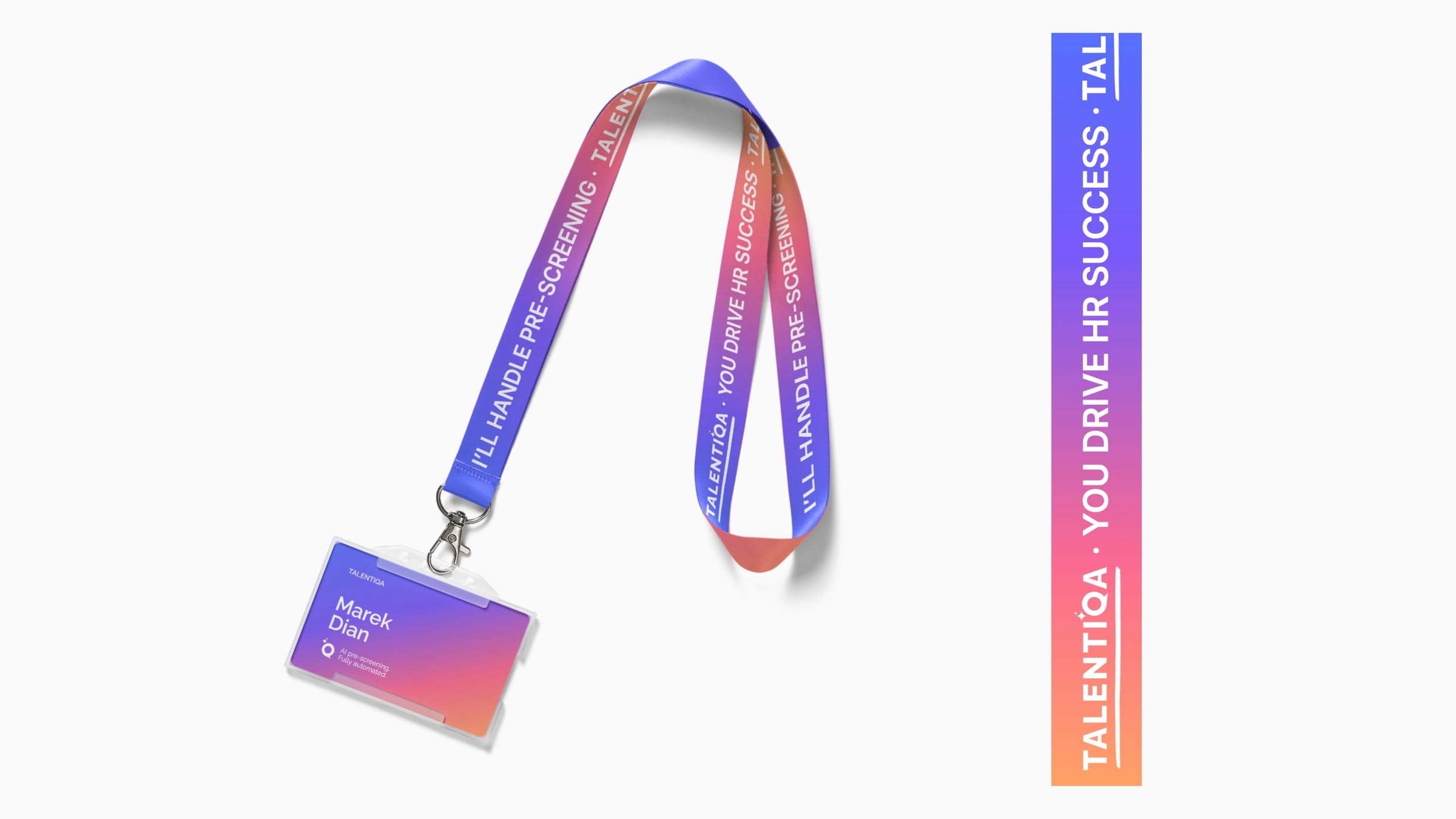
Superhuman Resources, printed without losing the gradient.
Lines such as “HR Queen of Pre-Screen” give the brand a sense of humour HR people can wear. Careful production kept the gradient intact in print.
The calls I made
- D01
Every candidate in one scored list. The recruiter keeps the decision.
- Context
- The assistant pre-screens; someone still has to decide who moves on.
- Options
- Decision
- One list, scored. Score, status and open questions per candidate, with an assistant beside the list suggesting next actions.
- Why
- Scores should rank, not decide. Keeping everyone visible makes the AI accountable to the recruiter. Trade-off: More rows on screen than a pure shortlist.
- D02
Candidates answer in a short chat, one question at a time.
- Context
- Recruiters set the interview questions; candidates answer them on a phone.
- Options
- Decision
- A chat with Ella. One question at a time, ready answers where possible, and a progress ring.
- Why
- Ready answers turn a conversation into comparable data without making it feel like a form. Trade-off: A chat is slower to skim than a form, so the recruiter reads the result, not the transcript.
- D03
The Q became a speech bubble, with the spark of AI above it.
- Context
- The product is a conversation: Ella chats with candidates before a recruiter does.
- Options
- Decision
- A conversation mark. Carries the conversation and the AI at once.
- Why
- A brand for an assistant that talks should look like it talks. Trade-off: Less overtly “tech”, which suited the fairness positioning.
In hindsight
What I would do differently today.
The conversation is what a candidate sees, but the row is what decides. I would design the score first — what it counts, what it cannot see and what a recruiter is allowed to override — because a fair conversation can still produce an unfair ranking.
Ready answers make responses comparable, which is what the recruiter’s table needs, and narrower, which is not always what the candidate needs. I would measure where that trade sits: how often someone leaves the ready answers, and what they write when they do.
“No CVs, no bias” was written in a brand document and became a constraint the product had to keep. I would put every promise from the homepage on the product backlog with an owner, instead of relying on one person holding both sides in the room.
Lucie single-handedly created Talentiqa’s marketing strategy, brand and website from scratch, grounded in deep persona insights.
More work
All projects → AI
Motionshift
An AI video tool shaped by what its first users actually needed.
 AI
Amass
Life-science data in one place, with every claim cited to its source.
 Health
Movido
A recovery app that starts by asking what you want to get back to.
 Consumer
LEGO
An event app for LEGO, mapped before anyone drew a screen.
 Sports
FK Jablonec
The apple tree was in the club’s name all along.
 AI
INIT
Engineering intelligence for the industries that build the world.